In this economy, homeowners face a variety of economic challenges. Rather than succumb to falling real estate prices and uncertainty, there is an alternative: practical investments in personal protection, starting with fire safety, which upgrade a home's value for the betterment of everyone. This decision, which complements recent state laws requiring the installation of sprinklers and other fire safety equipment for newly expanded homes, is an affordable but effective way to immediately improve the worth of residential and commercial properties.
Homeowners in several states, including California, already endorse this idea, based on the financial conditions of the real estate market and the importance of making personal safety a top priority.
Please note: fire safety equipment refers to, among other things, the installation and maintenance of sprinklers, not smoke detectors. The latter are often unreliable - by detecting everything, including burnt toast, they detect nothing – and insufficient in the midst of a flash fire or sudden calamity. The new law mandates, instead, the use of more sophisticated equipment with a proven record of success for both residential and commercial clients.
The installation of fire safety equipment is not simply a matter for homeowners in the midst of a renovation or expansion. Many residents nationwide recognize that their own protection starts with a serious inventory of the options necessary to achieve this goal. Meaning: fire safety is no longer an afterthought or discretionary purchase; it is the principal means of distinguishing one property from another, while preserving the natural beauty of a home.
In contrast, other changes to a home - like the construction of a swimming pool or spa or decking – may only appeal to a select group of people, which means there is a substantial risk these "amenities" will become costly liabilities. Never mind the added expense of maintaining something a future buyer does not want and will not use. Right now, homes that have assets that appeal to everyone - things like effective security systems, energy efficient plumbing, and yes, fire safety equipment - will create equity.
With a basic investment in concealed sprinklers and regular maintenance, homeowners can fulfill both their legal responsibilities and their interests in safety. The lasting worth of this decision gives residents some much needed peace of mind, particularly during these otherwise difficult times.
Finally, some additional advice for homeowners: always work with certified, credible fire safety professionals. This topic is too important to be the plaything of inexperienced or unqualified technicians. With this understanding and an emphasis on results, homeowners have a new way to succeed. Safety is their path to new-found protection and growth.
Read More...
You can find more information on the Real Estate market and view available listings in your area at www.ThePhillyKind.com
Monday, February 13, 2012


Thursday, February 9, 2012

The agreement brings to end a massive investigation into foreclosure abuse launched by all 50 state attorneys general in 2010..
As reported by Bloomberg News, the $25 billion deal includes three main components. One is a $1.5 billion payment to some 750,000 borrowers who lost their homes to foreclosure – an amount that works out to about $2,000 per borrower. A second is a $17 billion fund that will cover debt forgiveness, forbearance, short sales and other forms of assistance for struggling homeowners. The third is a commitment to provide $3 billion towards refinancing of mortgages to lower interest rates.
The five lenders involved are the five largest in the country: Bank of America, JPMorgan, Wells Fargo, Citigroup and Ally Financial. Negotiations continue with several other lenders; if all of those agree to the settlement, the total value of the deal to homeowners could go as high as $40 to $45 billion.
Oklahoma’s attorney general entered into a separate, $18.6 million settlement with the banks.
It could be argued that some form of loan forgiveness would be necessary in order to clear up the foreclosure mess and give the housing market a real forward push. This agreement provides just that while preserving homeowners’ rights to seek legal redress for past abuses. Sounds like a win-win to us. Now let’s see how the market performs in the wake of the settlement.
-By Sandy Smith for PhiladelphiaRealEstate.com
For additional information on the current Philadelphia Real Estate Market or should you want to view available homes for sale even if you want to find the value of your current home; visit www.ThePhillyKind.com
Friday, January 20, 2012
Housing Inventory is Shrinking...Good News for the Housing Sector

There were fewer homes listed for sale at the end of 2011 than in any of the previous four years, a positive sign for the housing sector.
But appearances can be deceiving, and it remains to be seen whether the drop is the beginning of a real recovery or if inventory is being held down by sellers waiting for prices to pick up and banks moving slowly on foreclosures.
The 1.89 million homes on the market at the end of December represented a 6% decline from November and a 22.3% decline from one year ago, according to data compiled by Realtor.com.
Low inventories are an important ingredient for any housing recovery because prices could firm up in markets that have worked through their inventory.
Still, some real-estate agents aren’t celebrating because there’s a large backlog of potential foreclosures that haven’t yet been taken back and listed by banks. The inventory declines are particularly pronounced in certain states where banks have sharply slowed down foreclosures to correct document-handling abuses.
Moreover, some sellers have pulled their homes off the market to wait for a turn in prices, and that “pent up” demand from sellers could keep inventories higher once prices do rise.
read more...
You can visit my website ThePhillyKind.com for market information, search available listings or contact a mortgage consultant.
Thursday, January 12, 2012
How much does it cost to buy a home?

Often when speaking with potential buyers, I am asked how much will it cost to purchase a home. Aside from the purchase price of the home there are a few expenses to remember.
Down Payment
This is entirely up to the Buyer. With FHA loans, a buyer can put as little as 3.5% down. This payment is broken up between the initial deposit that is submitted with the Offer to Purchase, second deposit and the remaining amount which is due at closing. Conventional loans usually want to see 20% down but different mortgage lenders will also allow 3.5% as well.
Inspections
After the Buyer has submitted and offer which is accepted the process begins. A home inspection is not required but it is strongly recommended. A home inspector will inspect every facet of the home from the plumbing to the electric to the operation of windows. They will let you know if there are any issues with the home and how serious they are. A good home inspector will also provide Termite inspection and a Radon test too. Inspections can range from a basic inspection $300 up to a complete inspection which includes termite and radon for $600. Most inspectors will offer a discount if you order all three tests.
Closing Costs
Closing fees, also called settlement costs, cover almost every expense associated with your home loan. Because closing costs typically amount to between 3% and 5% of the sale price, it is best to wait until you receive the good-faith estimate before committing to a loan. Smart shoppers obtain good-faith estimates from two or more lenders, compare their costs and ask questions about any large discrepancies. Taxes are Title Insurance are the largest components of Closing Costs so I'll explain these in more detail.
Transfer Taxes
Closing costs also include Transfer Taxes: In the City of Philadelphia there is a total of 4% due for taxes. This is split between the Buyer and Seller, 2% from the Buyer and 2% from the Seller.
Title Insurance
These fees cover the administrative costs of a title search, title examination, issuance of the title commitment/binder and final title insurance policy(ies.) Also included would be charges for conducting the closing/settlement/escrow. You are free to select the company to conduct your closing/settlement/escrow, and to shop for the best pricing, however Title Insurance fees are regulated by the Federal Government so fees will be fairly similar between companies. Costs will differ depending on which policy a buyer chooses, if the home was sold previously within the last 10 years a cheaper "re-issue" policy would be available.
Read more...
You can visit my website ThePhillyKind.com for market information, search available listings or contact a mortgage consultant.
Friday, January 6, 2012
ThePhillyKind: 2012 Mortgage Rate Outlook
ThePhillyKind: 2012 Mortgage Rate Outlook: Mortgages There’s a possibility that mortgage rates could move considerably lower early this year. It will be brief, but here’s th...
2012 Mortgage Rate Outlook
Mortgages
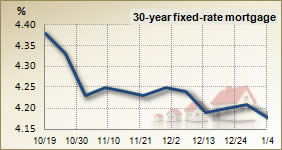
There’s a possibility that mortgage rates could move considerably lower early this year. It will be brief, but here’s the scenario under which I see that unfolding: If fears of the European debt crisis hit a crescendo, that’s going to spell the low point in Treasury yields and mortgage rates. You could see 30-year fixed mortgage rates moving down into the 3.5 percent neighborhood on average. But again, I believe that opportunity’s going to be brief. All told, for much of 2012, I expect we’re going to be in familiar territory: the low 4 percent neighborhood. The bottom line is that mortgage rates are not going to be an impediment to well-qualified borrowers anytime in 2012.
As part of the temporary resolution to the recent battle over the Tax Cut Extension that took place in the last weeks of December, Congress decided that mortgage borrowers should foot part of the bill. Technically, Congress increased the "Guaranty Fees" that Fannie Mae and Freddie Mac charge to lenders that securitize MBS (Mortgage-Backed-Securities) with the Agencies, but ultimately, this cost must either be absorbed by lenders, passed on to consumers, or some combination of the two.
From the official release on 12/29/11:
"On Dec. 23, 2011, President Obama signed into law the Temporary Payroll Tax Cut Continuation Act of 2011. Among its provisions, this new law directs the Federal Housing Finance Agency (FHFA) to increase guarantee fees charged by Fannie Mae and Freddie Mac (the Enterprises) by no less than 10 basis points from the average guarantee fees charged by these companies in 2011 on single-family mortgage-backed securities. This requirement is effective immediately, meaning that the average guarantee fees charged in2012 need be at least 10 basis points greater than the average guarantee fees charged in 2011."
The first official effects of these measures were seen today when BB&T distributed information to its brokers and correspondents regarding the impacts of the fee increase. In the announcement, BB&T explains that the 10 basis point increase in the Guaranty Fee or "G-Fee" as it's called, equates to roughly 0.125% in rate.
read more...
Monday, January 2, 2012
The History of Fishtown
Fishtown is a neighborhood of Philadelphia, Pennsylvania, and is one of the last truly "Family Neighborhoods" in Philadelphia. Most of the people here are cousin's or 2nd cousins, and have lived in the same homes for most of their lives. Located immediately northeast of Center City, Fishtown's borders are somewhat disputed today due to many factors, but are roughly defined by the triangle created by the Delaware River, Frankford Avenue, and York Street. Newer residents of the area consider it to go all the way up to Lehigh Avenue, while some older residents maintain the upper border to be Norris Street. HISTORY OF THE NEIGHBORHOOD PRE-1800 The area was originally inhabited by members of the Turtle Clan of the Lenni Lenape Indian tribe (who the Europeans named the Delaware Indian Tribe). The first European settlers were a group of 6 Swedish farming families, later replaced by British landed gentry, then British shipbuilders and German fishermen. 1800-1950 Within a few generations there was another influx of German immigrants, then still later in the late 19th century Polish and Irish Catholic immigrants. The two Roman Catholic Churches, St. Laurentius and Holy Name of Jesus, were built by these immigrants. Saint Laurentius, built by the Polish immigrants, and Holy Name, built by predominantly Irish and German immigrants, continue to serve the community. MODERN HISTORY The neighborhood has been working class for centuries. While poverty grew after jobs left in the de-industrialization which afflicted many "rust belt" cities, Fishtown's workers continued to maintain a stable working-class community. Most long-time residents trace their ancestry to Irish, German, and Polish Catholic immigrants. In recent years Fishtown has experienced moderate gentrification characterized by significant rises in housing prices and the opening or upscaling of art, entertainment, and dining establishments. An influx of artists and professionals has joined the ranks of police officers, fire fighters, carpenters, electricians, stone masons, plumbers, sheet-metal workers, and teamsters. The neighborhood has been chosen by the Commonwealth of Pennsylvania to be the site of the SugarHouse gaming complex, leading to some controversy within the neighborhood. read more... |

Subscribe to:
Posts (Atom)