Showing posts with label mortgage. Show all posts

Wednesday, April 18, 2012

Housing Set for Spring Recovery as ‘Fear Factor’ Fades

Five years after the U.S. housing bust sent sales and prices plunging, the spring home-buying season is pointing to a long-awaited recovery.

Reduced prices, record-low mortgage rates, higher rents and an improving job market appear to be emboldening many would-be buyers. 

Open houses are drawing crowds. A wave of foreclosures is leading investors to grab bargain-priced homes.
And many people seem to have concluded that prices won't drop much further. In some areas, prices have begun to tick up. 

Monday, February 27, 2012

Suze Orman Vs. Warren Buffett: Whose Real Estate Advice Should You Follow? (Hint...it's not Suze)

You know Suze Orman - she delivers hardcore financial gut checks to everyday Americans on a regular basis. In her latest book, The Money Class, she also recently delivered a pretty striking declaration: that the American Dream - which, for many, includes home ownership and upward economic mobility - is as dead as a doornail.
To back this up, she points to huge numbers of jobless and what she sees as the near impossibility of getting credit these days.

But you might also have heard of Warren Buffett. He just so happens to be the third richest human being on the planet.  In Buffett's most recent letter to his company's shareholders, he, too, made a striking declaration of his feelings about owning a home: "[h]ome ownership makes sense for most Americans, particularly at today’s lower prices and bargain interest rates."
And the Oracle of Omaha didn't stop there - he literally raved about home ownership, saying that "the third best investment I ever made was the purchase of my home." Now, that's a big statement from a guy whose investment decisions have earned him a net worth over $50 billion!
Suze says the American financial dream is dead. But Buffett says buy, and buy now.  Who's right?  (And who's wrong?!)

Orman is right that one extreme version of the American Dream is dead.  But not the traditional American Dream of owning an affordable home that appreciates over time. That basic premise of the value of homeownership is valid. But it may be valid for a smaller segment than ever before. Orman believes that renters should save, save, save up every penny and they may never be a candidate to own a home.

Buffett believes now is the time to purchase as affordability has never been better.  Buffet wins here; he's right that a home is a very strong investment, with abundant yields, both financial and emotional. And according to our latest survey, the American Dream of homeownership lives on in the hearts of the 72 percent of Americans who say owning the place they live is a part of their personal American Dream.

How can you make sure your exercise in owning a home is set up to be like Buffett's 3rd best investment (#s 1 and 2 were wedding rings, btw), rather than Orman's image of the American nightmare? Here are 3 basic steps Buffett urges every American who owns a home - or wants to - to include in their approach to home ownership.
1.  Ditch your "dream home" for a practical pad. When it comes to homes and mortgages, bigger is not always better.  What is better is to buy a home that makes sense for your family's future and its finances. In Buffettt's own words, "a house can be a nightmare if the buyer’s eyes are bigger than his wallet and if a lender . . . facilitates his fantasy."  Instead of buying dream homes, Buffett went on, the goal should be to buy a home you can afford.

2.  When you buy, plan to hold. Warren Buffett is worth $50 billion, and he still lives in the home he bought 52 years ago - for $31,500. Many Americans got caught in the housing crash when they took on mortgages they could only sustain for a short period of time, then weren't able to refinance as expected. Buffett's stock investing advice has long been to avoid making investments you can't hold for at least 10 years. Likewise, buying a home should be done with a long-term plan to avoid catastrophe when home values fluctuate in the short term. 

3.  Mortgages should have fixed, affordable payments. In his shareholder letter, Buffett points out that a housing company he holds has done vastly better than other real estate and mortgage industry players and attributes their success to the fact that "our approach was simply to get a meaningful down-payment and gear fixed monthly payments to a sensible percentage of income."
Buffett believes these two mortgage musts are the key to avoiding foreclosure, opining that "[i]f home buyers throughout the country had behaved like our buyers, America would not have had the crisis that it did. . ..  This policy kept [the company] solvent and also kept buyers in their homes."
Unless you are one of those rare buyers who know their income will increase by a predictable amount at a predictable point in time, like a lawyer prepping for partnership, a good rule of thumb is to stick with a fixed mortgage payment (including taxes and insurance) that's under 30 percent of your take home income.

P.S. - You should follow
Mike on Facebook, too!

Thursday, January 12, 2012

How much does it cost to buy a home?


Often when speaking with potential buyers, I am asked how much will it cost to purchase a home.  Aside from the purchase price of the home there are a few expenses to remember. 

Down Payment

This is entirely up to the Buyer.  With FHA loans, a buyer can put as little as 3.5% down.  This payment is broken up between the initial deposit that is submitted with the Offer to Purchase, second deposit and the remaining amount which is due at closing.  Conventional loans usually want to see 20% down but different mortgage lenders will also allow 3.5% as well.


Inspections
After the Buyer has submitted and offer which is accepted the process begins. A home inspection is not required but it is strongly recommended.  A home inspector will inspect every facet of the home from the plumbing to the electric to the operation of windows.  They will let you know if there are any issues with the home and how serious they are.  A good home inspector will also provide Termite inspection and a Radon test too.  Inspections can range from a basic inspection $300 up to a complete inspection which includes termite and radon for $600.  Most inspectors will offer a discount if you order all three tests.

Closing Costs
Closing fees, also called settlement costs, cover almost every expense associated with your home loan. Because closing costs typically amount to between 3% and 5% of the sale price, it is best to wait until you receive the good-faith estimate before committing to a loan. Smart shoppers obtain good-faith estimates from two or more lenders, compare their costs and ask questions about any large discrepancies. Taxes are Title Insurance are the largest components of Closing Costs so I'll explain these in more detail.


Transfer Taxes
Closing costs also include Transfer Taxes:  In the City of Philadelphia there is a total of 4% due for taxes.  This is split between the Buyer and Seller, 2% from the Buyer and 2% from the Seller.


Title Insurance
These fees cover the administrative costs of a title search, title examination, issuance of the title commitment/binder and final title insurance policy(ies.) Also included would be charges for conducting the closing/settlement/escrow. You are free to select the company to conduct your closing/settlement/escrow, and to shop for the best pricing, however Title Insurance fees are regulated by the Federal Government so fees will be fairly similar between companies.  Costs will differ depending on which policy a buyer chooses, if the home was sold previously within the last 10 years a cheaper "re-issue" policy would be available.


Read more...

You can visit my website ThePhillyKind.com for market information, search available listings or contact a mortgage consultant.  

Friday, January 6, 2012

2012 Mortgage Rate Outlook


Mortgages


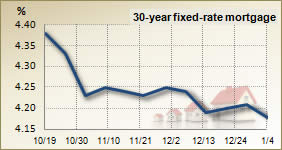
There’s a possibility that mortgage rates could move considerably lower early this year. It will be brief, but here’s the scenario under which I see that unfolding: If fears of the European debt crisis hit a crescendo, that’s going to spell the low point in Treasury yields and mortgage rates. You could see 30-year fixed mortgage rates moving down into the 3.5 percent neighborhood on average. But again, I believe that opportunity’s going to be brief. All told, for much of 2012, I expect we’re going to be in familiar territory: the low 4 percent neighborhood. The bottom line is that mortgage rates are not going to be an impediment to well-qualified borrowers anytime in 2012. 

Tax Cut Extension Has Begun To Raise Mortgage Rates!
As part of the temporary resolution to the recent battle over the Tax Cut Extension that took place in the last weeks of December, Congress decided that mortgage borrowers should foot part of the bill.  Technically, Congress increased the "Guaranty Fees" that Fannie Mae and Freddie Mac charge to lenders that securitize MBS (Mortgage-Backed-Securities) with the Agencies, but ultimately, this cost must either be absorbed by lenders, passed on to consumers, or some combination of the two.
From the official release on 12/29/11:

 "On Dec. 23, 2011, President Obama signed into law the Temporary Payroll Tax Cut Continuation Act of 2011. Among its provisions, this new law directs the Federal Housing Finance Agency (FHFA) to increase guarantee fees charged by Fannie Mae and Freddie Mac (the Enterprises) by no less than 10 basis points from the average guarantee fees charged by these companies in 2011 on single-family mortgage-backed securities. This requirement is effective immediately, meaning that the average guarantee fees charged in2012 need be at least 10 basis points greater than the average guarantee fees charged in 2011." 

 The first official effects of these measures were seen today when BB&T distributed information to its brokers and correspondents regarding the impacts of the fee increase.  In the announcement, BB&T explains that the 10 basis point increase in the Guaranty Fee or "G-Fee" as it's called, equates to roughly 0.125% in rate.  

read more...